



Table of Contents
▼- Data Analyst Cover Letter Writing Guide with Examples
- Why is a Cover Letter important
- Easy Cover Letter Structure
How to Write Each Section in Cover Letter- 1. Header & Greeting
- 2. Introduction
- 3. Body, Skills, Tools & Achievements
- 4. Why You Want This Company
- 5. Closing Paragraph
- How to Improve Your Cover Letter and What to Avoid
- Follow Steps to Write a Strong Cover Letter
- Avoid Mistakes That Can Hurt Your Application
- Example of Data Analyst Cover Letter
- Final Checklist Before Sending Cover Letter
- Conclusion
Data Analyst Cover Letter Writing Guide with Examples
Applying for a Data Analyst job can feel confusing. Many people don’t know what to write in their cover letter. But a good cover letter is important. It helps employers understand who you are. It shows your passion for data. It also explains why you are a strong fit for the job.
In this guide, I will show you how to write a simple and effective Data Analyst cover letter. You will learn what to include, how to structure it. You can also use the examples to create your own letter.
Why is a Cover Letter important
A cover letter gives you a chance to introduce yourself in a more personal way than a resume. It helps you:
- Show your communication skills
- Explain your most relevant experience
- Highlight your achievements with numbers
- Prove why you want that specific job
- Stand out from other candidates
A good cover letter shows that you understand the company and can clearly explain your skills, just like a Data Analyst explains insights.
Easy Cover Letter Structure
Here is a simple structure that works well:
|
Section |
What You Should Write |
|
Header |
Your name, email, phone number, and date |
|
Greeting |
Dear Hiring Manager or the manager’s name |
|
Introduction |
State the job you’re applying for + a strong skill or achievement |
|
Body |
Your skills, experience, tools you use, and your achievements |
|
Why This Company |
Show that you researched the company |
|
Closing |
Thank them + express interest in an interview |
How to Write Each Section in Cover Letter
A cover letter has several parts. Each part has a purpose. Writing them clearly helps the employer understand who you are and why you are a good fit. Here is a simple guide for each section:
1. Header & Greeting
Add your contact details at the top. Try to address the hiring manager by name if possible. If not, use: “Dear Hiring Manager,”
2. Introduction
Your introduction should quickly tell:
- Who you are
- The job you want
- One highlight that makes you a strong candidate
Example: “I’m excited to apply for the Data Analyst role at [Company Name]. With hands-on experience in SQL, Excel, and Python, along with a strong record of solving real business problems using data, I believe I would be a valuable addition to your team.
3. Body, Skills, Tools & Achievements
This is the most important part. Use simple language and short sentences.
You can include:
- Tools you know (SQL, Excel, Tableau, Python)
- Tasks you’ve done (cleaning data, creating dashboards, building reports)
- Real results (with numbers if possible)
When you write a cover letter, you can show your important achievements in a short list instead of long sentences. Example bullet points:
- Automated weekly data reports using SQL, saving the team 10+ hours each month.
- Designed interactive dashboards in Tableau for sales tracking.
- Used Python (Pandas, NumPy) to clean and analyse large datasets.
- Explained insights to non-technical team members in simple language.
4. Why You Want This Company
This shows employers that you did some research.
Example: “I’m excited about this role because your company values data-driven decision-making and innovation. I appreciate your recent focus on improving customer experience through analytics, and I would love to contribute to these projects.”
5. Closing Paragraph
End your letter politely and confidently.
Example: Thank you for taking the time to review my application. I would love the opportunity to discuss how my data skills and experience can support your team. I look forward to hearing from you.
How to Improve Your Cover Letter and What to Avoid
These points help you write a letter that is simple, clear, and effective. They also help the employer understand your skills quickly.
Follow Steps to Write a Strong Cover Letter
- Keep it short and clear
- Use simple language
- Add numbers to show impact
- Customize the letter for each job
- Show that you really want the job
- Read it again to fix errors
Avoid Mistakes That Can Hurt Your Application
- Don’t copy your resume word-for-word
- Don’t use long or complicated sentences
- Don’t forget to mention the company name
- Don’t make it too formal or too casual
Example of Data Analyst Cover Letter
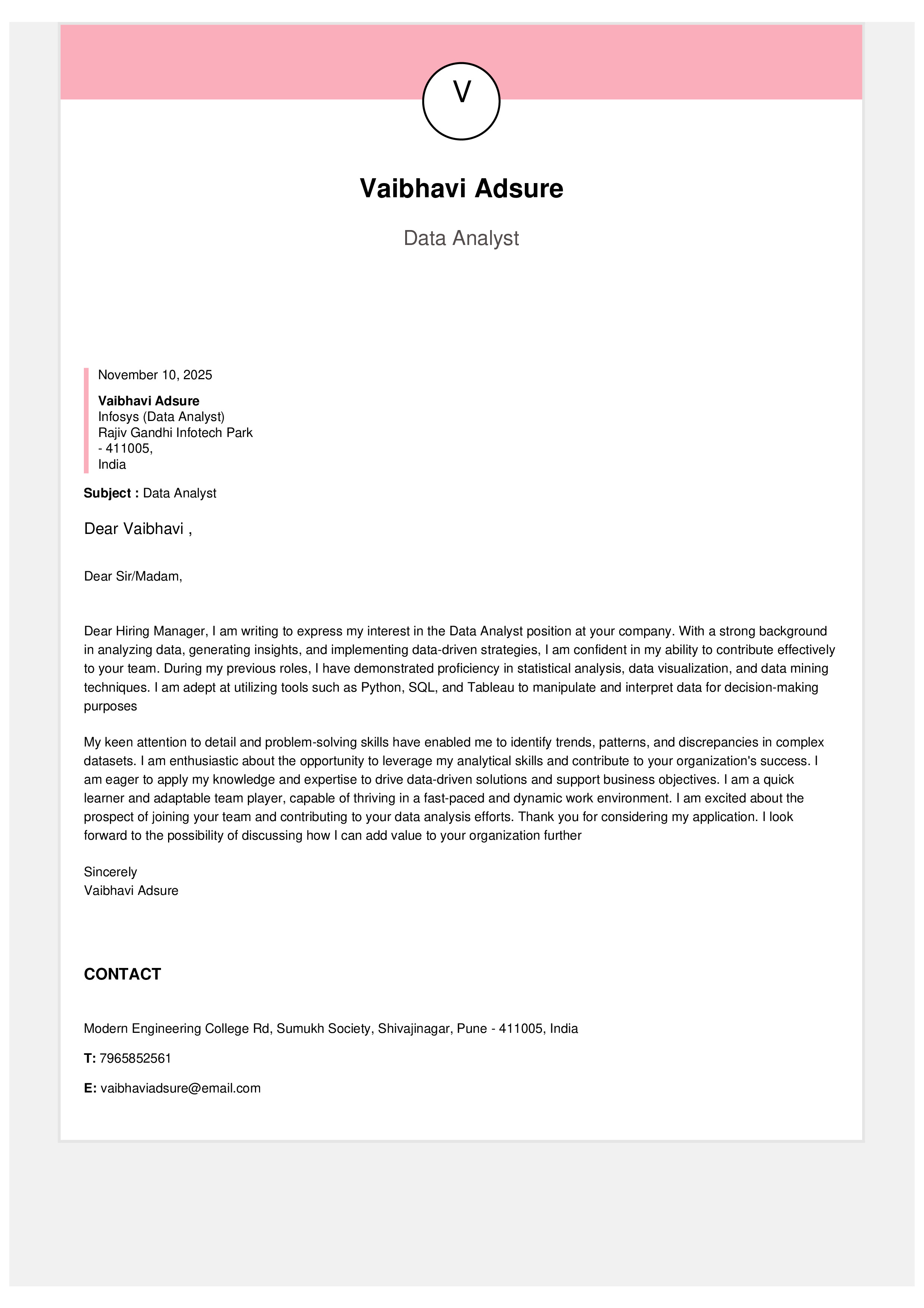
Here are example of how to write a data analyst cover letter
[Your Name]
[City, State] • [Phone Number] • [Email Address]• [Date]
[Hiring Manager’s Name]
[Company Name]
Dear [Hiring Manager’s Name],
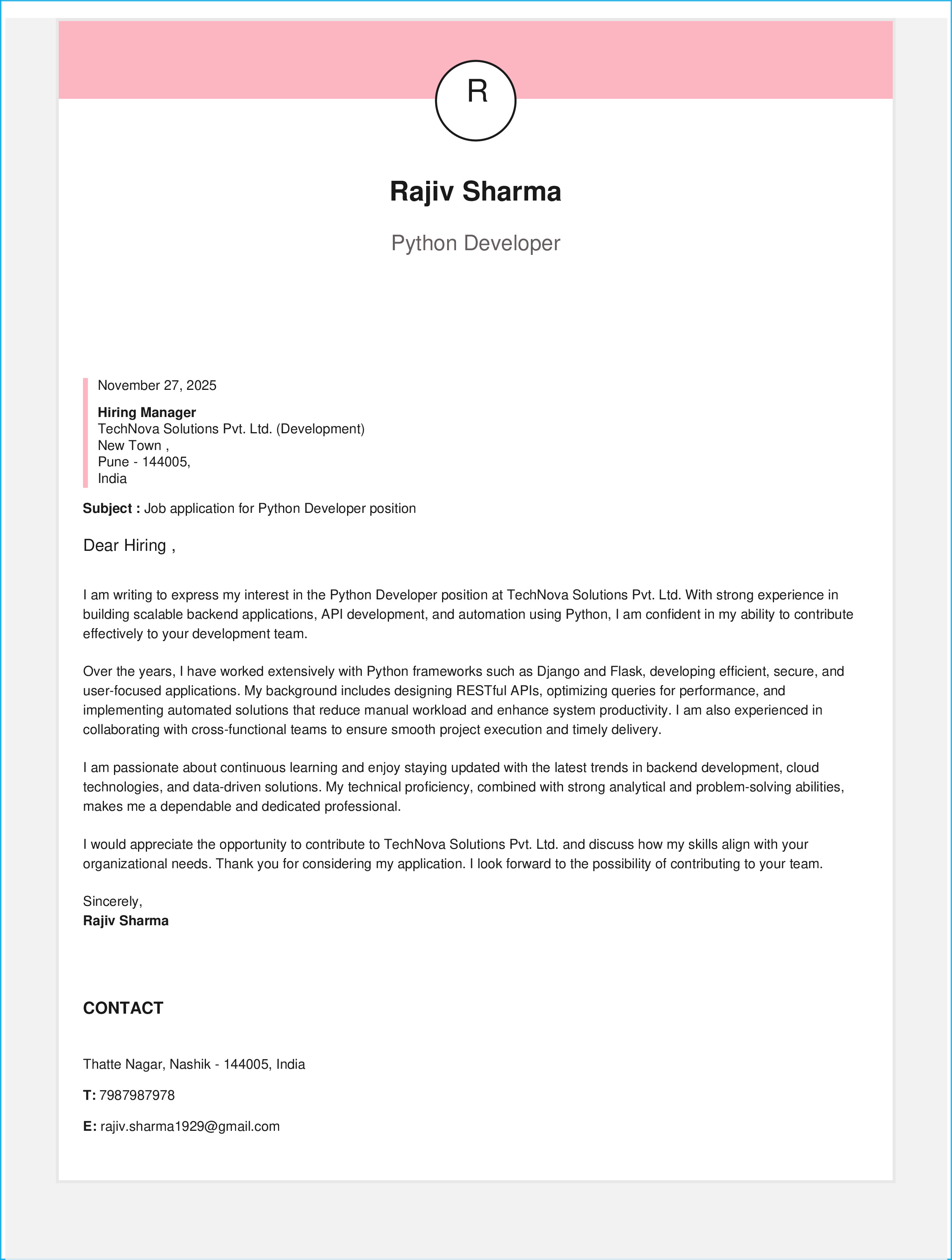
I’m excited to apply for the Data Analyst role at [Company Name]. I have experience working with SQL, Python, and Tableau to analyse data and create useful reports. I enjoy finding patterns in data and turning them into clear insights that help teams make better decisions.
In my previous role at [Previous Company]:
- I automated monthly reporting, which saved over 30 hours of manual work.
- I built dashboards that helped managers track performance in real time.
- I worked closely with different teams to understand business needs and explain insights clearly.
I’m especially interested in your company because of your focus on innovation and data-driven projects. I believe my technical skills and passion for problem-solving fit well with your goals.
Thank you for considering my application. I would appreciate the chance to discuss how I can support your team. I look forward to hearing from you.
Sincerely,
[Your Name]
Final Checklist Before Sending Cover Letter
Make sure your letter:
- Fits on one page
- Has no spelling mistakes
- Includes 2–3 achievements
- Mentions the company name
- Sounds positive and confident
- Matches the job description
Conclusion
Writing a good Data Analyst cover letter is easier when you follow a clear plan. By using simple words, sharing your skills, and showing why you want the job, you can make a strong impression. A cover letter helps employers understand who you are and what you can bring to their team. With the steps and examples in this guide, you can create a clean, clear, and effective cover letter that improves your chances of getting an interview.