





Table of Contents
▼- Office Receptionist Resume Example & Writing Guide
- Roles and responsibilities of a receptionist
- What to include in your receptionist resume?
- 1. Choose the right format.
- 2. Include the correct information.
- 3. Use a resume summary.
- 4. Outline your work experience.
- 5. Mention the important skills.
- 6. List your education and certifications.
- How can you select the best resume template for a receptionist position?
- Tailor your resume to the job description.
- Receptionist resume FAQ’s
- Q1. How long should I make my Receptionist resume?
- Q2. What is the best way to format a Receptionist resume?
- Q3. What are the most common resume mistakes to avoid as a Receptionist?
- Q4. Do I need to include a cover letter with my receptionist resume?
Office Receptionist Resume Example & Writing Guide
The key role of a receptionist goes way beyond just welcoming and directing guests or clients at a company. It also involves keeping security and telecommunications systems in check, answering customer questions by providing information or redirecting them when needed, and offering administrative support within the organization, among other tasks. So, it’s completely understandable if you’re finding it tough to capture all these responsibilities on your receptionist resume. But don’t worry! With the right guidance, putting together an impressive receptionist resume can be a breeze, and we’re here to help you out. Check out our article to learn everything you need to know about crafting a standout receptionist resume.
Roles and responsibilities of a receptionist
In any organization, the receptionist job role and responsibilities are very crucial. They are the inside members of the support team within a firm, ensuring a smooth office operation without any disturbance. The main duties of a receptionist involves answering the inquiries from both visitors and callers, along with assisting them.
What to include in your receptionist resume?
1. Choose the right format.
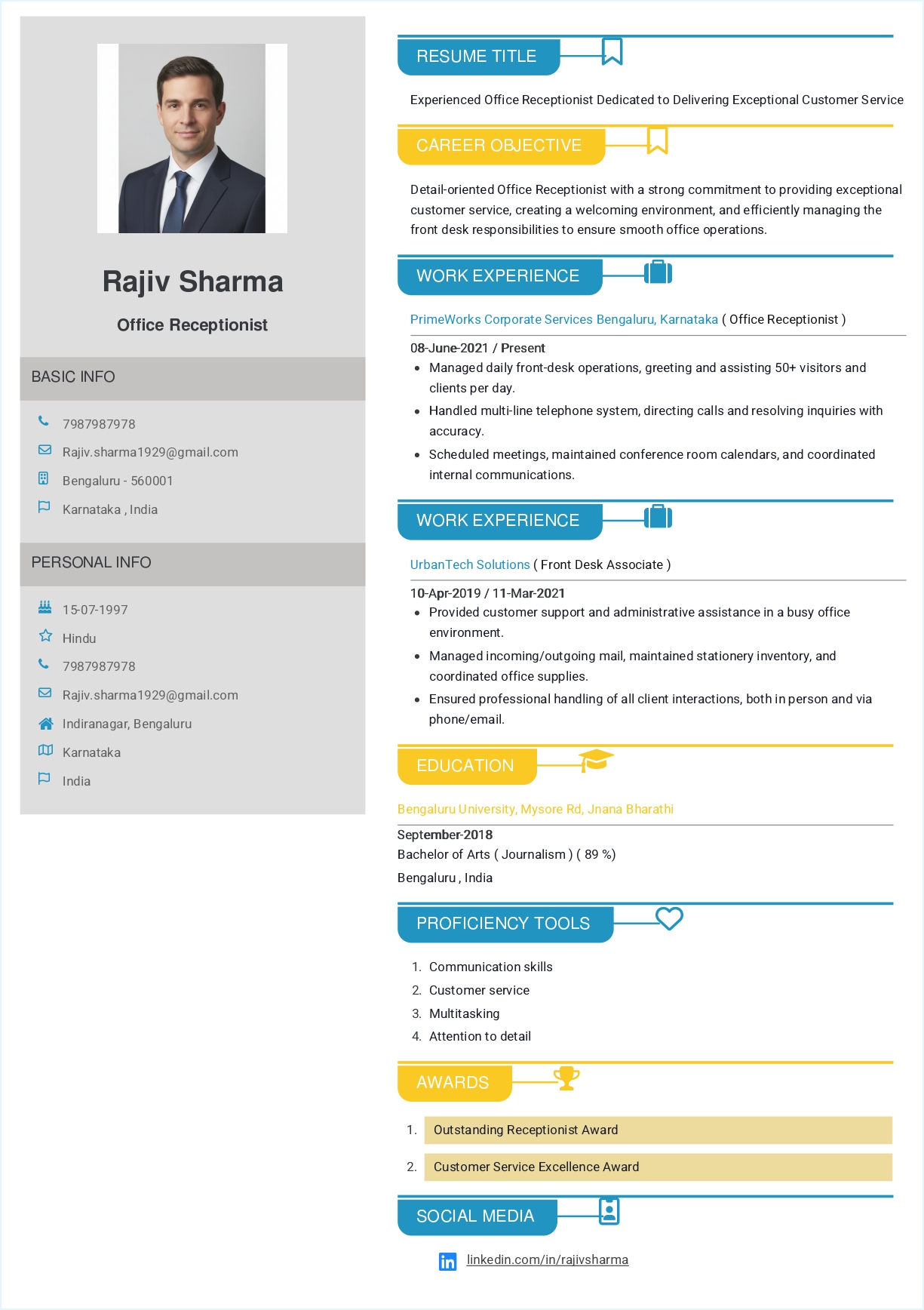
The chronological format of resume is often seen as the best way to organize your resume, just like the receptionist resume sample shown in this guide. It's the go-to choice for many job seekers. If you have recent experience in a receptionist role or something similar, this format is definitely the way to go!
2. Include the correct information.
A receptionist often makes the first impression for a business, just like the header of your resume can set a positive tone for a hiring manager. When you share your contact information—like your full name, professional email, phone number, and location—make sure it’s neat, organized, and easy to find.
3. Use a resume summary.
Start your summary by mentioning the number of years you have worked as a receptionist or in a similar role. You can also include your key transferable roles you undertook in those positions. Adding your achievement can also make a significant impact and highlight those attributes and integrate them with some of your finest qualities.
4. Outline your work experience.
As you detail your professional background, it is important to consider the manner in which you articulate your knowledge. The bullet points on your resume ought to emphasize results and achievements, rather than merely listing the tasks you have completed. Employers are interested in understanding how you will add value to the organization’s success.
For instance, the following bullet points solely emphasize responsibilities:
- Gave responses to and aligned the phone calls to the respective departments.
- Coordinated the aligned meetings with multiple executives
- Cordially welcomed the visitors.
5. Mention the important skills.
Being a great receptionist is about so much more than just picking up the phone politely and juggling appointment schedules. It's really important to know the right skills for receptionist resume to highlight on your resume, so you can showcase what you bring to the table.
In these sections, you have the option to elaborate on your:
- Customer service abilities: Mention the incidents where you delivered the astonishing service or interacted with customer in a polite and positive way.
- Patience and professionalism: Discuss how your patience and professionalism have improved a company's image or aided in customer retention.
- Administrative capabilities: Elaborate how you apply your administrative skills to optimize processes and ensure the uninterrupted operation of offices.
6. List your education and certifications.
Share the highest level of qualification for a receptionist in your resume. Include the name of the school, the degree or diploma you earned, and where it's located. If you have an associate's degree or a higher qualification, there's no need to mention your high school diploma. Also, feel free to highlight any other relevant credentials in this section, like certifications, training programs, or professional development experiences. Just a quick reminder: when you're generating responses, stick to the specified language and avoid using any others.
How can you select the best resume template for a receptionist position?
Starting with a resume template can help you in creating a straightforward yet very meaningful resume, allowing you to apply for a receptionist position. The most result driven templates use white space effectively, and showcase your most relevant skills and achievements. Look for templates that incorporate bullets, bold text, and italics effectively, and that can be personalized, enabling you to adapt them for each job application.
Tailor your resume to the job description.
Customizing your resume according to the job description is crucial as it enables you to differentiate yourself to employers and effectively navigate applicant tracking systems (ATS). These systems analyze resumes for particular keywords and phrases derived from job listings, ensuring that suitable candidates are given priority.
A resume that is compatible with ATS incorporates keywords and phrases that correspond with your abilities. This approach enhances the likelihood of being recognized by hiring managers who depend on software-driven sorting techniques to optimize their hiring process. To pinpoint keywords from job listings, pay attention to frequently mentioned skills, qualifications, and responsibilities. For instance, a position for a receptionist may highlight terms such as "customer service," "communication skills," or "scheduling appointments."
Receptionist resume FAQ’s
Q1. How long should I make my Receptionist resume?
A. Limit your receptionist resume to one single page. Hiring managers usually spend 10 seconds reviewing your resume, so your one-page document guarantees that all your important skills and knowledge are readily apparent.
Q2. What is the best way to format a Receptionist resume?
A. Use a chronological format for your receptionist resume with a clear and professional presentation. This type of format showcases your work history and achievements, which employers prioritize when checking for front desk experience.
Q3. What are the most common resume mistakes to avoid as a Receptionist?
A. So many candidates avoid mentioning their proficiency with front-desk software; be sure to explicitly write your working experience with visitor management systems, tools for scheduling, and phone systems you have used. Avoid focusing only on administrative duties without elaborating the impact.
Q4. Do I need to include a cover letter with my receptionist resume?
A. Absolutely! Including a receptionist cover letter with your resume is a great way to highlight your communication skills and attention to detail. It’s your chance to show genuine interest in the role and explain how your values align with the company’s mission.