




Table of Contents
▼Structural Engineer Resume Example & Writing Guide
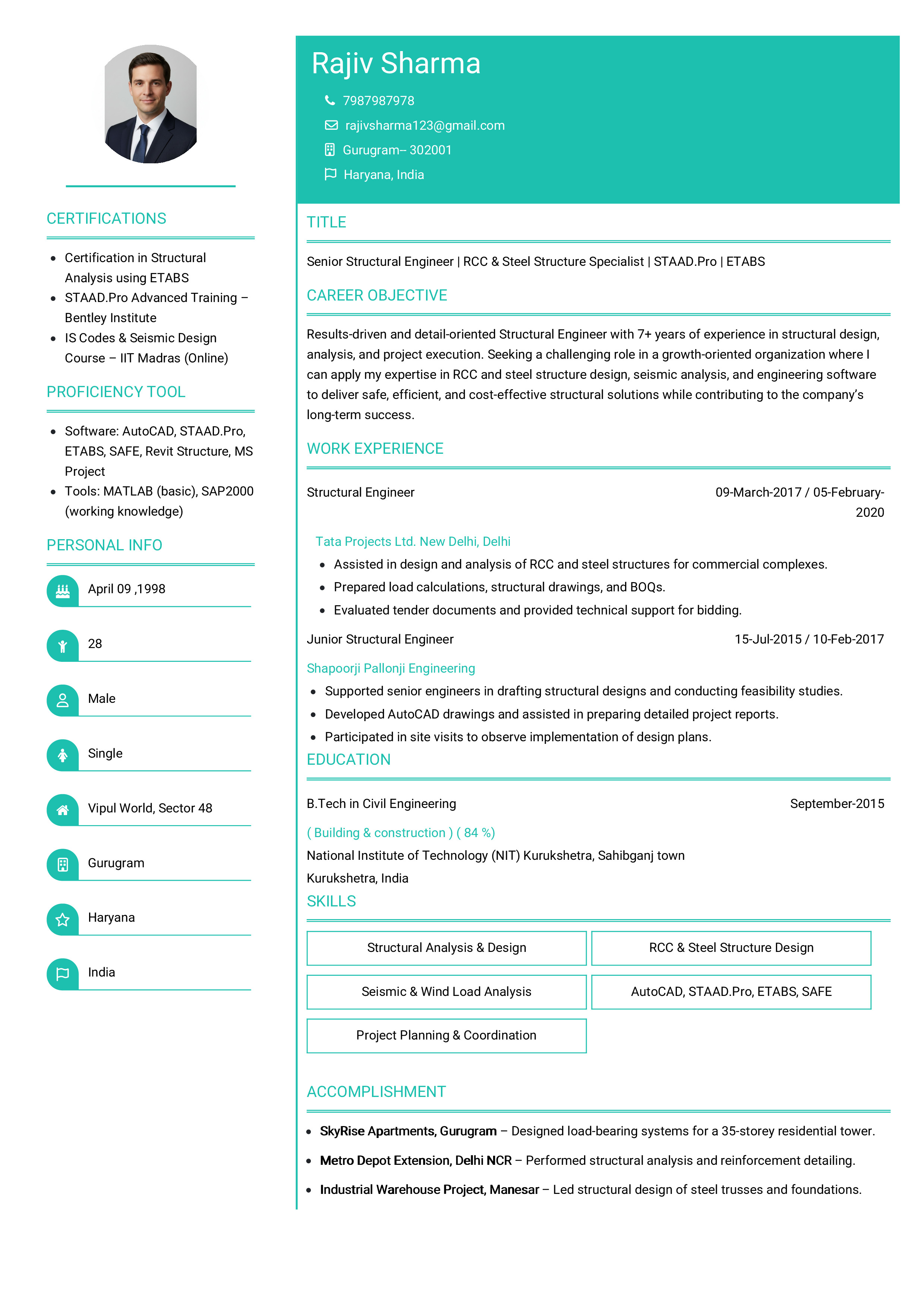
A structural engineer is a position responsible for designing and analyzing the structural integrity, safety, stability and strength of buildings, bridges and other infrastructural projects. Whether you are a fresher or someone with vast experience, it is essential that your structural engineer resume reflects those skills so that you can land your dream job.
However, crafting a perfect resume for structural engineer role in the market can be a bit tricky. It needs to be a perfect blend of storytelling while also highlighting your technical expertise, analytical ability, and practical project experience. So, how to tackle such a complex sounding task? Well, this structural engineer resume guide has that answer for you. In this guide, we will tell you everything from layout to content to everything else you need to incorporate in your structural engineer resume to impress the hiring manager.
Selecting a strong structural layout
The first thing you need to do is selecting a strong structural layout. By that we mean that your resume needs to be visually balanced, and tailored separately for all structural engineer jobs. The first thing you need to do is select the right format. For most, a reverse chronological format will work just fine. However, if you just graduated from a structural engineer course and are a fresher looking for their first proper job, a functional format will also work fine.
Now that you have to select the format, let’s look at everything you need to involve in your resume.
1. Header
Include your full name, contact number, Email ID, LinkedIn profile, and if possible, a portfolio link. Keep in mind that this is the the first thing that the hiring manager will look at. So, include all the information clearly and precisely without any mistakes.
2. Professional Summary
This is the section where you can make all the difference. A 3-4 line sentence to give an introduction of your career and skills to the structural engineer hiring manager. So, rather than simply including all your achievements, try to narrate a story of how you can impact the workforce of the company you are applying to positively.
Example:
Detail-oriented Structural Engineer with 6+ years of experience in designing and analyzing residential, commercial, and industrial structures. Proficient in AutoCAD, Revit, and STAAD Pro. Adept at collaborating with architects and contractors to ensure structural integrity, safety compliance, and cost efficiency.
3. Experience and Skill Section
Use bullet points in both of these sections to highlight your skills and employment roles. In skills section, mention both your technical and analytical skills alongside soft skills as well. Most of the companies are just not looking for a simple engineer, rather someone who can be of use in crisis mode and lead the team. Your soft skills will do that for you.
In your experience, focus on quantifiable numbers and always reflect your achievements in previous roles with numbers and percentages. There is a high chance that the recruiter is not an engineer themselves. So, using numbers will give them a clear idea and will massively increase your chances of acquiring a good structural engineer salary job.
Example:
Structural Engineer | Larsen & Toubro Ltd., Mumbai | June 2019–Present
- Designed and reviewed structural components for a 20,000 sq. ft. commercial complex using STAAD Pro and Revit.
- Collaborated with a cross-functional team to reduce project cost by 10% through efficient material selection.
- Conducted seismic and wind load analysis for multi-story structures, ensuring compliance with IS 1893 and IS 456 standards.
- Supervised on-site structural inspections to verify reinforcement detailing and safety standards.
4. Education, Projects and Certifications
If you are a fresher, these sections will replace the employment section, so you need to make it almost perfect. In the education section, start with the most recent degree followed by the older ones. Your certifications and projects will follow the education section. Here include all the extra and major projects and research that demonstrate your capabilities and skills.
Bonus Tip: Try to give preference to projects and research that relate to the structural engineer job description that you are applying to. It will help the recruiter to understand how you will be an asset and will also increase the chances of your resume bypassing the ATS system.
Example:
Certifications:
- Professional Engineer (PE) or Chartered Engineer (CEng)
- Autodesk Certified Professional (AutoCAD / Revit)
- STAAD Pro Advanced Certification
- Project Management Professional (PMP)
- OSHA Safety Certification (for on-site engineers)
5. Highlighting your skill sections
Structural Dynamic engineer is one of the most technical field to crack. So, while all the sections are important, it is your technical skills that will ultimately land you the job, so this section should be treated with utmost responsibility. Try to group all your skills under categories to make them stand out. Here are some relevant skills that you can add to your resume:
Technical Skills:
- Design & Analysis: AutoCAD, STAAD Pro, ETABS, SAFE, SAP2000, Tekla Structures, Revit.
- Modeling & Drafting: Revit, SketchUp, SolidWorks.
- Codes & Standards: IS 456, IS 1893, ACI 318, Eurocode, BS 8110.
- Structural Materials Knowledge: RCC, steel, prestressed concrete, composites.
Soft Skills:
- Analytical thinking
- Project management
- Communication and teamwork
- Problem-solving
- Time management
Some formatting and customization tips
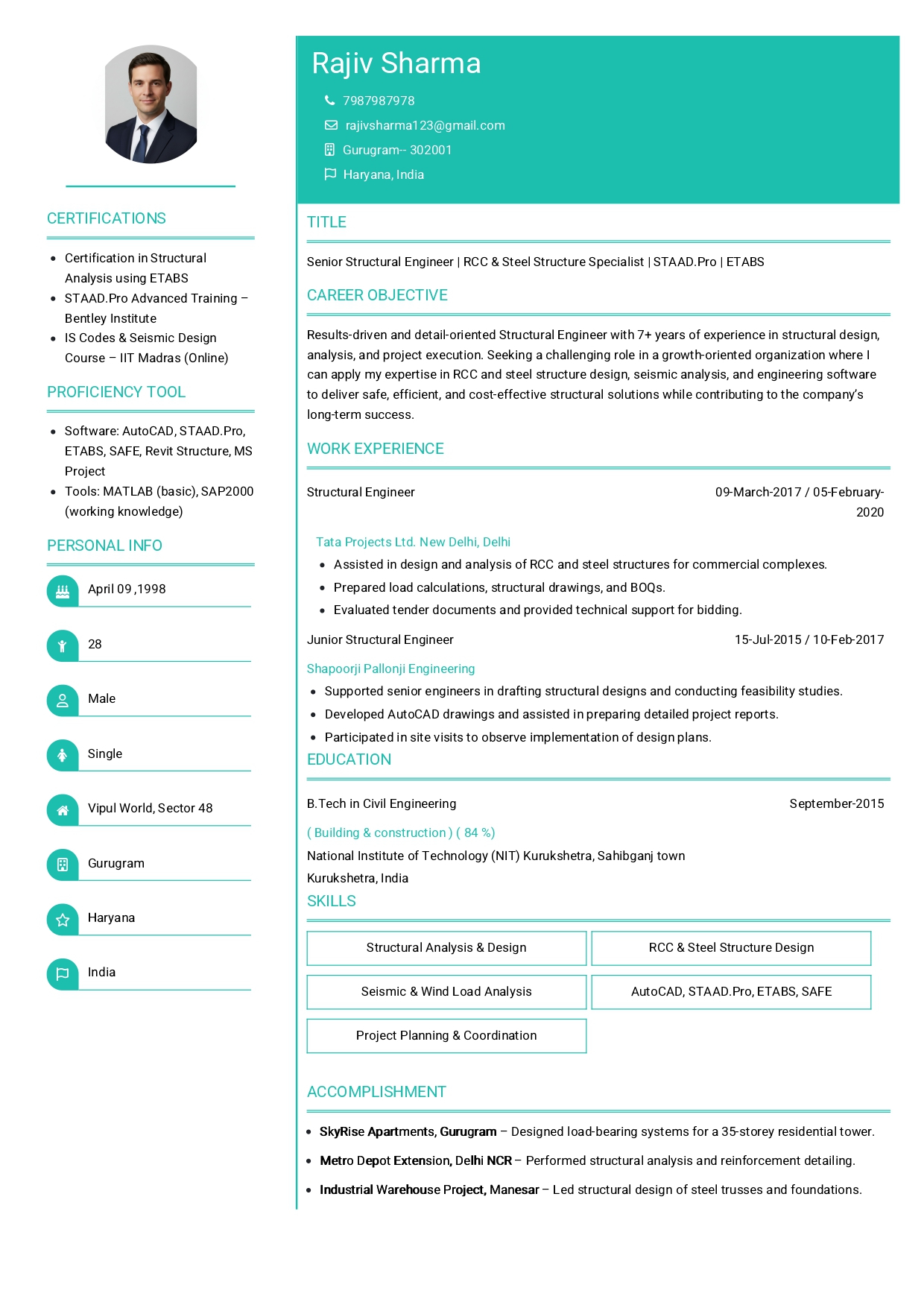
- Whether you are applying for a remote job or some specific regional like structural engineer jobs in Banglore, you need to customize your resume accordingly. A few tweaks are needed according to the job description as it will help you bypass the ATS system.
- Include your achievements in cost savings, safety improvements, or efficiency metrics in numbers. Quantifiable data always looks better to the recruiter.
- Use constant font, size and spacing throughout. Changing them constantly will make the resume inconsistent.
- Always export your structural engineer portfolio in PDF so that the structure and format remain constant.
Conclusion
A well-crafted structural engineer resume is not just an introduction to your skills, but a document that highlights all your technical, analytical and problem-solving capabilities. So, if you follow these simple steps in the guide, you will be able to craft a resume that will immediately grab the attention of the recruiter, making your resume a standout amongst hundreds of applications.
Advance your career with a resume that distinguishes you from the competition. Utilize the JobsCruze Resume Builder to swiftly craft a refined, ATS-compatible resume within minutes. Click here to construct your professional resume today and enhance your likelihood of securing employment with JobsCruze!